2024 Mental Self Care Workbook Canva KDP: A Practical, Customizable Tool for Consistent Self-Reflection
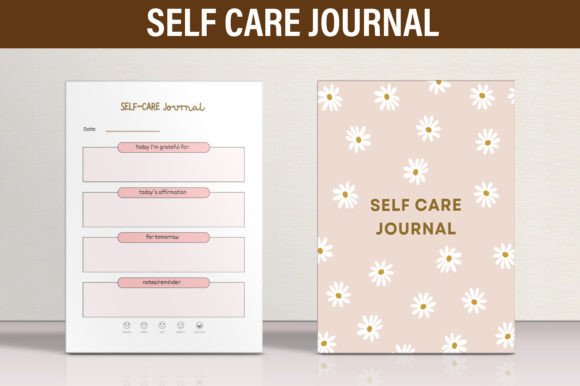
The 2024 Mental Self Care Workbook Canva KDP is a digital interior template designed for creators, therapists, coaches, and individuals who want to build or use a structured, printable mental wellness resource. Unlike static PDF journals or pre-printed notebooks, this version delivers editable source files—JPG, PNG, and PDF—alongside a live Canva link that lets users modify text, colors, fonts, and layout before finalizing for print or digital use. It’s built specifically for Kindle Direct Publishing (KDP) interiors but functions equally well for personal practice, clinical support tools, or small-business offerings.
What Sets This Workbook Apart From Other Self-Care Resources
Most self-care journals fall into two broad categories: rigidly formatted printables with fixed content, or open-ended blank notebooks requiring users to design their own structure. The 2024 Mental Self Care Workbook Canva KDP occupies a middle ground—it provides evidence-informed frameworks (like SMART goal setting, anxiety symptom tracking, and gratitude journaling) while preserving flexibility in design and personalization.
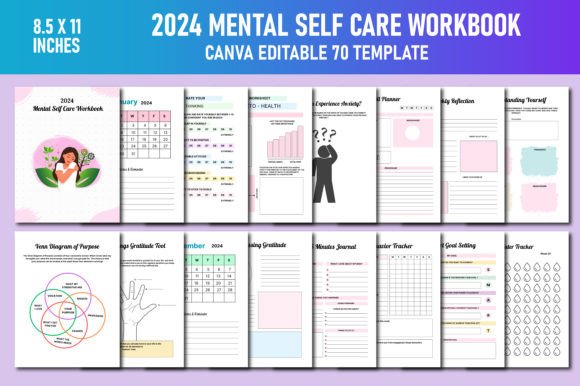
For example, the “RATE YOUR THINKING WORKSHEET” isn’t just a checklist—it invites reflection on cognitive distortions, mood patterns, and behavioral responses across time. Similarly, the “Venn Diagram of Purpose” helps clarify overlapping values, skills, and needs without prescribing how to interpret them. These aren’t filler pages; they’re grounded in therapeutic practices like CBT, positive psychology, and motivational interviewing—but presented accessibly.
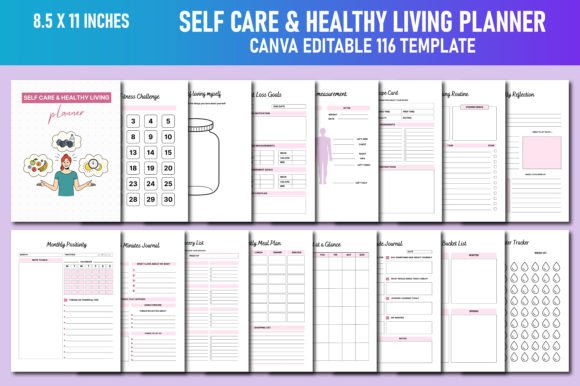
The inclusion of both clinical and lifestyle tools—such as Medication Log, Therapy Notes, Sleep Tracker, and My Bucket List—means it supports users across varying levels of mental health engagement. Someone managing depression with medication may rely heavily on the Antidepressant Boosters and Doctor Visits pages, while another person focusing on prevention might prioritize Weekly Gratitude and Personal Boundaries.
How It Compares With Alternative Formats
Compared to physical workbooks sold on Amazon or Etsy, the 2024 Mental Self Care Workbook Canva KDP offers greater adaptability at lower long-term cost. Physical copies are non-editable and often sized for standard US letter or A4 paper only. In contrast, this version includes interiors in multiple popular KDP sizes—including 6×9, 7×10, and 8.5×11 inches—and all files are print-ready at 300 DPI. That means no resizing headaches when preparing for upload or home printing.
Digital-only planners (like Notion templates or GoodNotes-compatible PDFs) offer interactivity but lack tactile engagement and offline reliability. The 2024 Mental Self Care Workbook Canva KDP bridges that gap: you can print individual pages as needed, bind them into a custom notebook, or export sections for tablet annotation. Its hybrid nature makes it suitable for both screen-based review and pen-and-paper processing—important for users who benefit from motor memory in journaling.
When compared to generic Canva templates marketed as “self-care journals,” this workbook stands out through intentional sequencing and functional cohesion. Pages aren’t grouped by theme alone—they’re scaffolded. You’ll find the 5 Minutes Journal early in the flow, followed by deeper tools like Understanding Yourself and Changing Negative Core Beliefs. That progression mirrors how many clinicians introduce skill-building: start small, gather data, then shift perspective.
Strengths and Realistic Tradeoffs
A key strength lies in its balance between guidance and autonomy. Because the Canva link is fully editable, users can remove pages irrelevant to their goals (e.g., skipping Anxiety Affirmation if focus is on sleep hygiene), translate prompts into another language, or adjust reading level for neurodivergent users. That kind of customization isn’t possible with most off-the-shelf journals.
However, there are tradeoffs. Since it’s a template—not a guided course—it doesn’t include explanations, instructions, or facilitator notes. Someone unfamiliar with terms like “Pareto–Health” or “Control Your Clutter” may need to research those concepts separately. Likewise, while the Safety Plan page provides structure, it doesn’t replace clinical input for crisis planning. Users should treat it as a companion tool—not a substitute—for professional care.
Another consideration: file management. With JPG, PNG, and PDF versions included—and layered Canva assets—the package requires basic digital literacy to navigate. Those uncomfortable editing in Canva or exporting high-res PDFs may find the learning curve steeper than expected. For that reason, it’s best suited for users already familiar with Canva or willing to spend 20–30 minutes watching a short tutorial.
Best-Fit Situations and Decision Factors
The 2024 Mental Self Care Workbook Canva KDP is especially valuable when:
- You're creating your own KDP journal and need professionally designed, compliant interiors that meet Amazon’s formatting requirements;
- You work with clients across diverse needs and want one adaptable base document instead of maintaining ten separate trackers;
- You prefer consistency in layout and typography across multiple wellness domains (sleep, anxiety, gratitude, boundaries);
- You value having both visual tools (like the Venn Diagram of Purpose) and linear logs (like the Behavior Tracker) in one cohesive system.
It may be less ideal if you:
- Prefer voice-based or app-integrated tracking (e.g., syncing with Apple Health or Headspace);
- Need real-time collaboration features (shared editing, cloud sync, automatic backups);
- Require ADA-compliant accessibility features such as screen reader tagging or adjustable font scaling beyond what Canva allows;
- Want daily prompts delivered automatically rather than selecting and printing pages manually.
Practical Use Cases Across Contexts
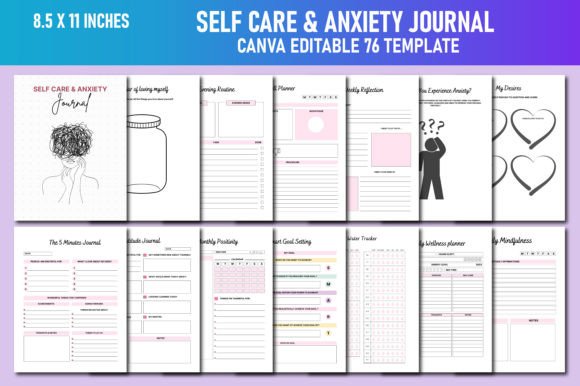
In a clinical setting, a therapist might extract the Therapy Notes and How Do You Experience Anxiety pages to share with clients between sessions—customized with office branding and simplified language. In an office wellness program, HR teams could adapt the Stress Factors and Bucket List sections into team check-ins or quarterly reflection exercises. At home, someone recovering from burnout might print only the Meditation Tracker, Sleep Tracker, and Weekly Reflection pages each Sunday, binding them into a lightweight booklet.
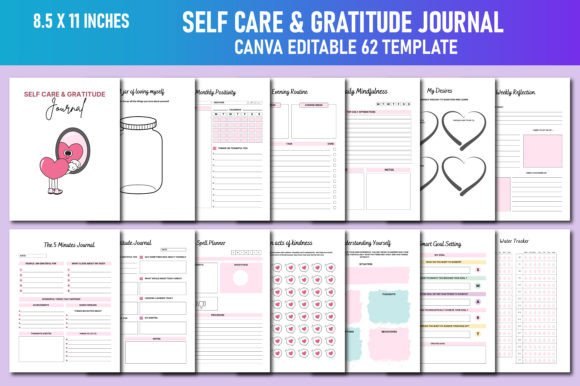
Even educators and life coaches find utility here. The 5 Things Gratitude Tool and Positive Journal pair well with classroom SEL curricula, while SMART Goal Setting and My 10 Affirmations support coaching frameworks focused on agency and growth mindset.
Final Considerations Before Choosing
If you're comparing options, ask yourself three questions:
- Do I need control over content, layout, and branding? If yes, the editable Canva link and layered files make the 2024 Mental Self Care Workbook Canva KDP a strong candidate.
- Am I comfortable managing digital files and doing light design work—or do I want something ready-to-print with zero setup? The latter favors pre-formatted PDFs; the former aligns with this template.
- Is my goal to support others or deepen my own practice? For supporting others (clients, students, teams), customization and scalability matter more. For personal use, simplicity and ease of access may outweigh flexibility.
No single tool fits every need. But for those seeking a thoughtful, clinically aware, and genuinely editable foundation—one that respects user autonomy while offering structure—the 2024 Mental Self Care Workbook Canva KDP delivers tangible utility across contexts, formats, and intentions.